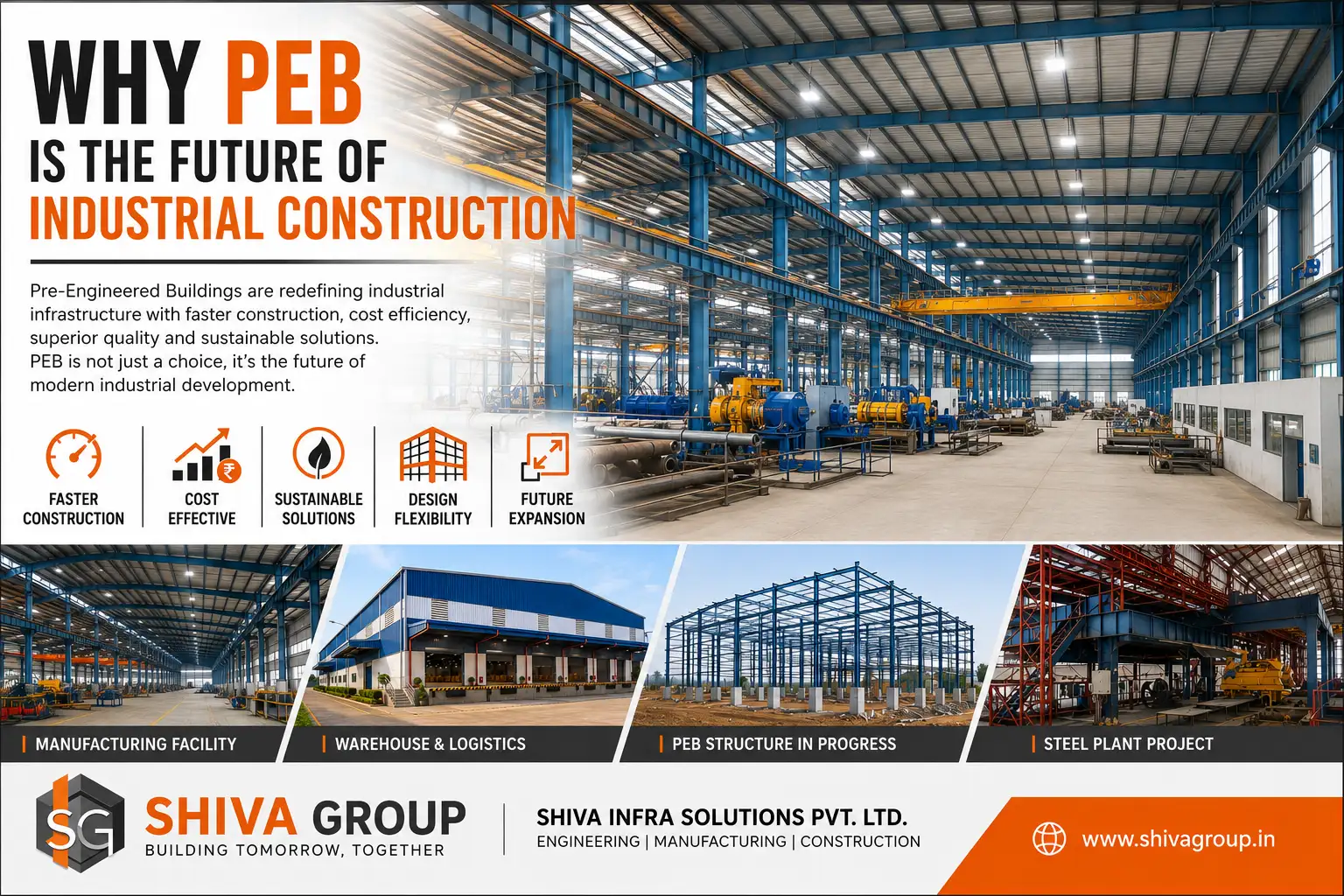
PEB Companies in Delhi NCR India: What Services Should You Expect?

Introduction The demand for Pre-Engineered Buildings (PEBs) has grown rapidly across India over the last decade, especially in industrial and commercial sectors. Businesses today require construction solutions that are faster, more cost-effective, and highly durable. This is where PEB companies in Delhi NCR play a significant role by delivering modern steel building solutions for warehouses, factories, logistics parks, commercial complexes, manufacturing units, aircraft hangars, and institutional buildings. Delhi NCR has emerged as one of India’s fastest-growing industrial and infrastructure hubs. With increasing investments in logistics, manufacturing, warehousing, renewable energy, food processing, pharmaceuticals, and automotive industries, the need for reliable PEB construction companies continues to rise. However, not every company offering PEB solutions provides the same level of expertise, engineering capability, or project execution. Choosing the right partner is one of the most important decisions for any industrial project because it directly impacts construction quality, project timelines, operational efficiency, and long-term maintenance costs. Whether you are planning to construct a warehouse, industrial shed, factory building, commercial complex, logistics center, or steel structure, understanding the services offered by professional PEB manufacturers in Delhi NCR will help you make an informed investment. This comprehensive guide explains the essential services you should expect from a trusted PEB company and why experienced organizations such as Shiva Infra Solutions Pvt Ltd continue to be preferred partners for industrial infrastructure projects across India. What is a PEB Company? A Pre-Engineered Building (PEB) company specializes in designing, manufacturing, fabricating, supplying, and erecting steel buildings that are engineered specifically for a client’s project requirements. Unlike traditional RCC construction, where most components are fabricated on-site, PEB buildings are manufactured in controlled factory environments using advanced engineering software and precision machinery. The components are then transported to the project location, where they are assembled efficiently. A professional PEB company generally offers: The primary objective is to provide a building that is stronger, lighter, faster to construct, and more economical than conventional construction methods. Today, PEB structures are widely used for: Why Delhi NCR Has Become a Major Hub for PEB Construction Delhi NCR has become one of India’s most active regions for industrial development. The rapid expansion of manufacturing zones, logistics hubs, expressways, metro connectivity, and industrial corridors has created significant demand for steel construction solutions. Several factors contribute to this growth: Strategic Location Delhi NCR provides excellent connectivity to North India through highways, railways, airports, and freight corridors. This makes it an ideal location for warehouses, manufacturing facilities, and distribution centers. Growing Industrial Development Industrial areas such as Noida, Greater Noida, Ghaziabad, Gurugram, Faridabad, Sonipat, Bhiwadi, Manesar, Neemrana, and Bahadurgarh are witnessing continuous investment in industrial infrastructure. These regions require: Most of these projects now prefer PEB technology because of faster project completion and reduced construction costs. Expansion of E-Commerce The rapid growth of e-commerce companies has dramatically increased the demand for large-span warehouses and fulfillment centers. Major logistics operators prefer PEB buildings because they provide: Government Infrastructure Initiatives Programs such as Make in India, PM Gati Shakti, Dedicated Freight Corridors, Smart Cities, and industrial corridor development have accelerated investments in steel infrastructure. As a result, experienced PEB companies in Delhi NCR are playing an increasingly important role in delivering industrial projects efficiently. Why Choosing the Right PEB Company Matters Selecting a PEB company should never be based solely on price. An experienced company brings together engineering expertise, manufacturing capability, project management skills, and quality assurance systems that directly influence project success. A reliable PEB company offers several advantages. Better Engineering Every building is designed according to: Proper engineering improves structural safety while reducing unnecessary steel consumption. Faster Project Completion An experienced manufacturer follows a systematic workflow that includes: This streamlined process helps reduce delays and ensures faster project delivery. Superior Quality Professional PEB manufacturers implement strict quality control measures during: This results in stronger and more durable buildings. Cost Optimization A well-designed PEB structure minimizes steel wastage and construction time, reducing the overall project cost while maintaining high performance. Long-Term Reliability Industrial buildings are expected to perform for decades. High-quality engineering and precision manufacturing reduce maintenance requirements and improve operational efficiency over the building’s life cycle. What Makes a Professional PEB Company Different? Not every steel fabricator qualifies as a professional PEB company. Leading organizations invest in advanced software, automated manufacturing equipment, experienced structural engineers, certified welders, quality management systems, and skilled project execution teams. Before finalizing a contractor, evaluate whether the company can provide: A company that offers end-to-end services reduces coordination challenges, ensures better quality control, and provides a single point of accountability throughout the project lifecycle. Core Services Offered by Professional PEB Companies Choosing the right PEB company goes far beyond selecting a steel fabricator. A professional PEB company in Delhi NCR should provide complete project support, from concept and engineering to manufacturing, erection, and post-installation assistance. The following are the essential services you should expect when partnering with an experienced PEB manufacturer. 1. Project Consultation and Requirement Analysis Every successful PEB project begins with a detailed consultation. Before preparing drawings or quotations, a reliable PEB company takes the time to understand your business requirements, operational processes, and future expansion plans. During this stage, the engineering team typically evaluates: This information helps create a customized solution rather than a standard building design. For example, a warehouse designed for an e-commerce company will have very different requirements compared to a steel manufacturing plant or food processing facility. 2. Site Survey and Technical Evaluation Professional PEB companies conduct a comprehensive site assessment before finalizing the building design. A site survey helps engineers understand: Soil Conditions The strength of the soil determines the type and size of foundation required. Wind Speed Delhi NCR experiences varying wind loads depending on the project location. Engineers calculate these loads to ensure structural stability. Seismic Zone Delhi NCR falls under a significant seismic region. Structural designs must comply with Indian earthquake-resistant standards. Site Accessibility Transportation routes, available working space, nearby structures, and equipment movement are also considered during planning. Proper site evaluation … Read more